







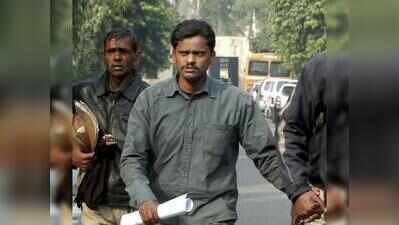
Noida: Surinder Koli was four hours from death on Sept 7, 2014. The black warrant bore his name and gallows protocol had been activated at Meerut district jail. It had been five years since a Ghaziabad CBI court pronounced the first of 13 death sentences against the man on trial for the Nithari killings of 2006. Hope of clemency had waned after it was upheld by the high court and Supreme Court and President rejected his mercy petition.After an intervention by lawyer Indira Jaising and a midnight hearing in Supreme Court, Koli was brought back from the gallows. In the years that followed, the convictions against him were overturned by Allahabad high court. On Nov 11, 2025, Supreme Court acquitted Koli – who for nearly two decades was called ‘Butcher of Nithari’ – in the last case that had kept him in jail. The next day, he walked out a free man. That freedom lasted less than a year. Koli was found dead in Haridwar on Friday.Koli’s time in jail was defined by one overriding purpose: to acquit himself. For a large part of trial proceedings in the CBI court, he argued his own cases. As a prisoner in Ghaziabad’s Dasna jail, he drowned himself in sheaves of papers where he purportedly wrote out legal arguments that he presented in court.Sept 2014 was his closest call. Koli had been transferred quietly from Dasna jail in Ghaziabad, where he had been lodged since his arrest in Dec 2006, to Meerut. His execution was set for 5am on Sept 8.After his mercy plea was rejected, Koli had written to lawyers Yug Mohit Chaudhary, Payoshi Roy and Siddharth Sharma for help after being advised by someone in jail to approach the trio, who were known to take up death-penalty cases.Chaudhary alerted Jaising four hours before the execution. At 1am, Jaising appeared before Justice H L Dattu, who woke up another judge, Justice Anil Dave. Court staff were summoned from their homes. At 1.50am, Supreme Court stayed Koli’s execution.The intervention came nearly eight years after Koli’s arrest on Dec 29, 2006. Lawyers told TOI his journey through the criminal justice system had been compromised right from the beginning.Ravindra S Garai, Supreme Court advocate-on-record who represented Koli in the trial court in 2016 in one of the cases – the murder of Nanda Devi, a 25-year-old house helper – had earlier told TOI, “This case had almost no evidence at all. It was astonishing to see that even the complainant in the case was not cross-examined, the police never produced him in court, and solely based on DNA proof, it was established that this victim went missing and was murdered by Koli.”Between 2009 and 2022, Koli was sentenced to death in 13 cases. He was accused of rape, murder, necrophilia and cannibalism. The first conviction came in the Rimpa Haldar case.“What prompted us to take his case up in 2014 was how a poor defenceless man was falsely implicated and made a scapegoat to protect the rich and powerful. And despite such shoddy evidence, the prosecution almost succeeded in numbing judicial scrutiny and executing an innocent man,” Roy had earlier told TOI.After Supreme Court stayed the execution, it allowed a fresh review petition to be heard in open court. Ram Jethmalani appeared pro bono before Justices Markandey Katju and Gyan Sudha Misra, arguing that Koli’s confession was “false and unreliable”, had been extracted under duress, and that crucial forensic evidence, including autopsy findings, had been suppressed.Supreme Court rejected the review petition on Oct 28, 2014. However, the proceedings highlighted gaps in the case. On Jan 28, 2015, a high court bench led by Chief Justice D Y Chandrachud commuted Koli’s death sentence to life imprisonment.While the legal battle continued, Koli withdrew into his notes. Prisoner No. 522/09 led a reclusive life. Jail authorities bound the A4 sheets he made copious notes on in the order he wanted before each hearing. His notes eventually filled several bags and weighed about 20kg. He filed more than 100 RTIs, most of them seeking information about his ailments and why he was not being taken to a hospital outside the jail. Visits from his family were infrequent. His brother Sonu and wife Shanti Devi visited him, while his mother, Kunti Devi, visited regularly during the early years of his incarceration.Koli was his own defence counsel for much of the decade, occasionally assisted by lawyers. He carried the notes to court himself, usually in a tightly held white cloth bag. Sometimes, his arguments continued for 10 days. He also cross-examined witnesses, though the proceedings did not always go smoothly. Khalid Khan, the lawyer who represented victims’ families in six cases, said he had seen Koli lose his temper while cross-examining witnesses.Between 2016 and 2023, as the remaining Nithari cases went to trial, Chaudhary, Roy and Sharma represented Koli and argued the cases before the high court.“We argued that Koli’s confession could not be treated as voluntary because he was kept in prolonged and unexplained police custody. It was pointed out that Koli had consistently alleged torture and said he was forced to memorise details that he later repeated before the magistrate and during scientific tests,” Roy had told TOI earlier.The defence also argued that the drain where the skeletal remains were found was not exclusively accessible to Koli.“The defence also questioned the credibility of the recovery evidence, arguing that mere proximity to the place where the remains were found could not be treated as incriminating. If that were the case, others living nearby, including Dr Naveen Chaudhry of D6 Kothi, behind which many skulls were discovered, should also have been investigated. Naveen, who had been previously arrested in an organ trade scam, was never interrogated,” Chaudhary had said.On Oct 16, 2023, the high court acquitted Koli in 12 cases and Pandher in two. It held that the prosecution had failed to prove their guilt beyond reasonable doubt on the settled parameters of a case based on circumstantial evidence. While Pandher walked free in 2023, Koli remained in jail because the Rimpa Haldar case remained pending.On Nov 11, 2025, a Supreme Court bench of Chief Justice B R Gavai and Justices Surya Kant and Vikram Nath allowed Koli’s curative petition and acquitted him in that case as well. The court held that the same confession and recovery evidence could not be treated as unreliable in 12 cases but sufficient to sustain the conviction in the 13th.“The offences in Nithari were heinous, and the suffering of the families is beyond measure,” the court said. “It is a matter of deep regret that despite prolonged investigation, the identity of the actual perpetrator has not been established in a manner that meets the legal standards.”Brajesh Kumar, superintendent of Luksar jail, said on Friday officials initially kept a strict watch on Koli’s movements. They later found him behaving normally. He woke around 5.30am, studied and sometimes offered prayers. Sources said they had not noticed any suicidal tendency during his stay in jail.