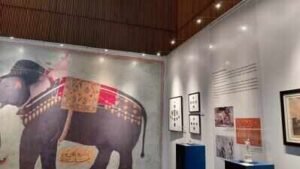
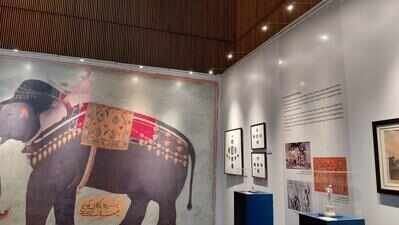


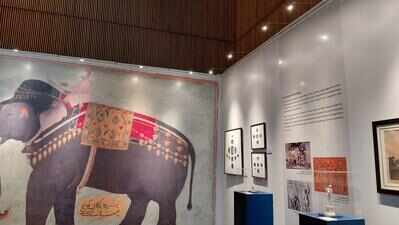
Patna: A month-long Gaja-Lok exhibition is underway at the Bihar Museum. Inaugurated on June 20 in the presence of art and culture minister Pramod Kumar, the exhibition will remain open to visitors till July 19.Organised in collaboration with the Indian National Trust for Art and Cultural Heritage (Intach), the exhibition explores the enduring relationship between humans and elephants across India and Southeast Asia. It highlights the Asian elephant’s role in shaping faith, politics and mythology for more than 2,000 years.Director general, Bihar Museum, Anjani Kumar Singh, said since ancient times, the elephant has been the largest living creature in the imagination of Asia. “Through Gaja-Lok, a cultural history exhibition, we are narrating a story of reverence and the cultural symbolism of elephants in Asia, and of a relationship that has evolved over time and continues to do so today,” he said.He said elephants occupy a prominent place in the folk songs of Bhojpur and the Madhubani paintings, where they symbolise royalty, strength and auspiciousness. They are associated with the arrival of the groom, wedding processions and seasonal agricultural activities.Intach state convener Bhairav Lal Das said Sonepur has long been revered as the site of the legendary battle of Gaja and Grah, believed to have taken place around 2,000 years ago. At a time when human-elephant conflicts over survival are becoming increasingly common, the exhibition seeks to remind people that the two have shared a relationship of harmony and coexistence for centuries.He added that, drawing on historical evidence, including cave paintings and Mauryan-era coins, the exhibition brings together a rich collection of images celebrating humanity’s friendship, reverence and enduring bond with the elephant.The exhibition showcases a rich collection of images highlighting the cultural and artistic significance of elephants across Asia. Among the exhibits are the Gaja Prastha style of architecture; the Nakul Sahadeva Ratha (7th century CE) at Mahabalipuram, Tamil Nadu; the elephant rock-cut sculpture at Dhauli near Bhubaneswar in Odisha; the Descent of the Ganga relief at Mahabalipuram; and 18th and 19th century chess pieces carved from elephant tusks, curated at the Patna Museum.It also traces ancient trade routes and cultural exchanges between the Indus Valley, West Asia, Sanchi and Southeast Asia, particularly through the spread of Buddhism. The display includes depictions of Buddha as an elephant at Borobudur Temple in Java, Indonesia; the Navanarikunjara painted wooden panel from Sri Lanka; and terracotta plaques dating from the 11th to 14th century CE from Myanmar.