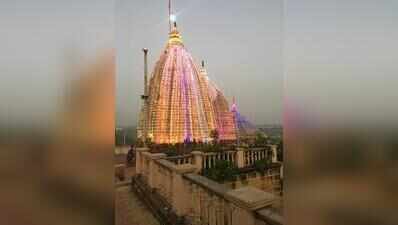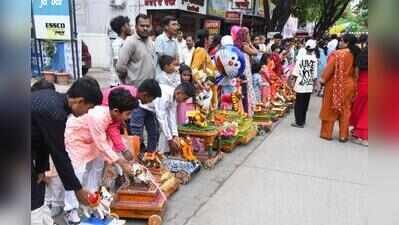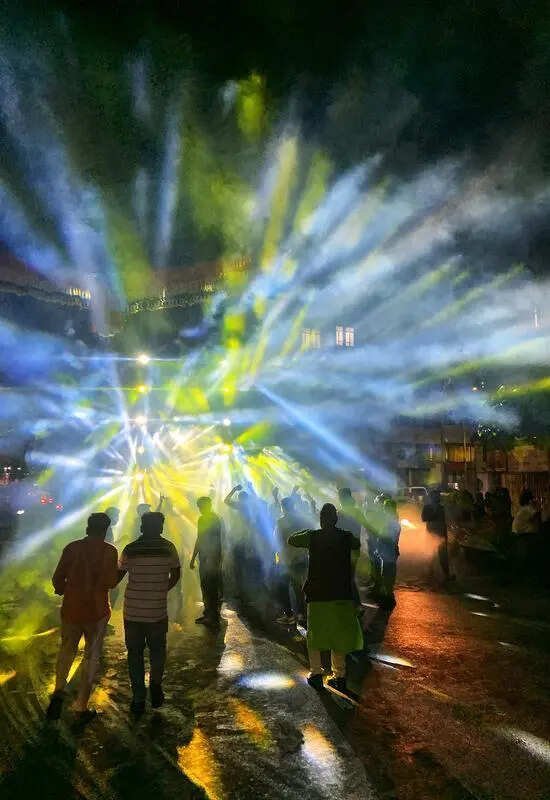








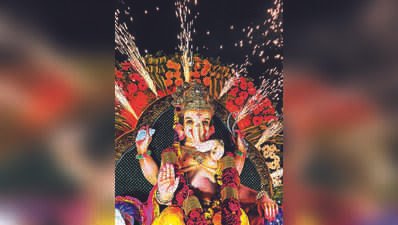
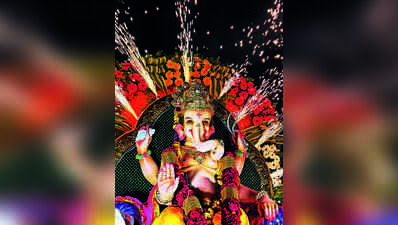
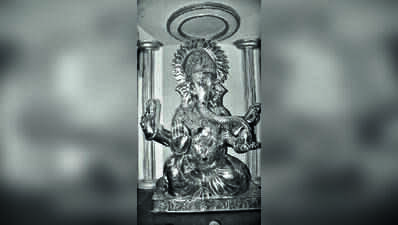
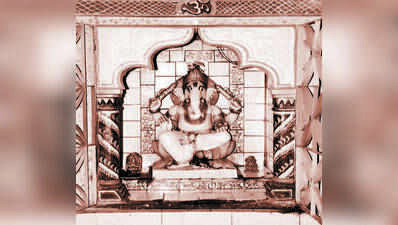
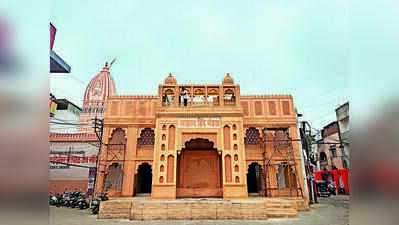
Amravati: In the heart of Budhwara, where memories of India’s freedom struggle still linger in the narrow lanes and historic neighbourhoods, Azad Hind Mandal is preparing to celebrate its 99th Sarvajanik Ganeshotsav. More than just a festival committee, the Mandal stands as a living institution that has blended devotion, nationalism, sports, culture and social service for nearly a century.Its roots are closely linked with the history of Maharashtra’s public Ganesh festival movement. In Amravati, the first Sarvajanik Ganeshotsav was started in 1900 by Shrimant Dadasaheb Khaparde, a close associate of Lokmanya Bal Gangadhar Tilak, at the Indrabhuvan Theatre. Inspired by the movement, Ganesh celebrations gradually spread across localities within the city’s old walled precincts.The story of Azad Hind Mandal began in 1926 with the establishment of the Royal Club in Budhwara. Inspired by noted patriots Veer Wamanrao Joshi, Nanasaheb Bamangaonkar and Annasaheb Kaloti, the club aimed to channel the energy of local youth through indigenous sports such as kabaddi, hututu, atyapatya and kho-kho. It also sought to strengthen community organisation and patriotic values.The pioneering team behind the initiative included Babasaheb Kaloti, Popatlal Raja, Kashinathrao Hatole, Laddumiya Gulam Ali, M.D. Agrawal, Vishnupant Lokhande, Arjunrao Lohar Kanhaiyyaji, Ramrao Birsule, Dada Pailwan and Trimbakrao Wathodkar.In 1928, the Royal Club launched its first Sarvajanik Ganeshotsav at the wada of Giriraj Anna Deshpande before shifting to a public pandal in Budhwara. What began with simple decorations eventually evolved into elaborate tableaux depicting mythological, historical and social themes.A defining chapter came in 1948. According to festival secretary Revan Someshwar Pusatkar, the Royal Club was renamed Azad Hind Mandal by Captain Shahnawaz Khan of Netaji Subhash Chandra Bose’s Azad Hind Fauj after he unfurled the national tricolour at the venue on Independence Day, giving the organisation its enduring identity.Over the decades, successive generations strengthened the Mandal’s foundations. Leaders such as Gopalrao Kaloti, Haribhau Kaloti, Bhausaheb Kohle, Baburao Bijwe, Baburao Jadhav, Gopalrao Joshi, Nanasaheb Sathe, Nanasaheb Dighekar, the Kewale brothers and Mahadeorao Ingole played key roles in expanding its activities.The Mandal celebrated its Silver Jubilee in 1953-54 under the leadership of Haribhau Kaloti and chairperson Shankarlal Rathi. The Golden Jubilee celebrations between 1978 and 1980 marked a high point, inaugurated by Padma Shri Dr Shivajirao Patwardhan. The programme featured social and historical plays, lectures, Kavi Sammelans, orchestras, blood donation drives, cleanliness campaigns and religious activities. A marble idol of Lord Ganesha was installed during the celebrations. Later, in 2002, the Diamond Jubilee year saw the installation of a 21-kg pure silver Ganesh idol, which remains one of Budhwara’s prized attractions.# SPORTING LEGACYAzad Hind Mandal carved a distinctive sporting identity through kabaddi. After the golden jubilee, Padma Shri Prabhakarrao Vaidya became president and gave new direction to social, cultural and religious activities. Kabaddi tournaments are held in memory of national player Balasaheb Dighekar. Former mayor Vilas Ingole, who is president of Amravati District and Vidarbha Kabaddi Association, led the sport under the guidance of Subhash Pusatkar.The Mandal won Vidarbha and state-level trophies and produced Indian team players Surendra Chikhalkar and Vinayak Mali. Prabhakarrao Kewale captained the Nagpur University kabaddi team, while wrestlers Prakash Ingole and Sanjay Tirathkar earned the prestigious Vidarbha Kesari title.# POLITICAL CONTRIBUTIONIts influence extended into public life as well. Veer Wamanrao Joshi became Amravati’s first elected municipal president, while Annasaheb Kaloti, Gopalrao Kaloti, Haribhau Kaloti, former mayor Vilas Ingole, three-time MP Anant Gudhe, Shiv Sena district chief Someshwar Pusatkar and Vivek Kaloti all contributed to civic and political leadership. Today, the mandal is headed by Padma Shri Prabhakarrao Vaidya. The women’s wing has 250 active members.# GANESHOTSAV HIGHLIGHTSThe mandal’s Ganeshotsav is known for its grand arrival procession with lezim, women’s dindi, tipri, bhangra, tribal and Maadiya dances, and chitraraths of great personalities, deities and social messages. For years, Yakub Khan’s band played the Ganpati aarti beautifully. Theatre, nurtured by late Rajabhau More who gave it a national name, has been a major attraction.The famed ‘Nagrik Vadvivad’ public debate series attracted political and intellectual stalwarts including Nitin Gadkari, Devendra Fadnavis, Dr Kumar Saptarshi, Adv Shrihari Aney, Dadasaheb Gawai and others, drawing audiences from across Vidarbha.In 1969, during the Punjabrao Krishi Vidyapeeth agitation, a tableau was so impactful that the govt had to ban it.# SOCIAL IMPACTSocial responsibility has remained central to the mandal’s mission. Members have cleaned the city during sanitation workers’ strikes, aided flood victims in Movad, promoted communal harmony during tense periods and regularly organise blood donation drives and outreach programmes for senior citizens.# Khatu Shyam Replica This YearAs the Mandal enters its 99th year, preparations are underway for a grand celebration centred on a replica of the famous Khatu Shyam Temple of Sikar, Rajasthan, designed by Anil Wat and his team. Festival president Sachin Wankhade, led by Gnyaneshwar Hiwase and supported by secretary Revan Pusatkar, Krishna Hiwase, Vedant Dange and other volunteers, is overseeing the arrangements. A special bhajan programme by renowned Khatu Shyam lyricist Chhotu Singh Rawna on Sept 19 promises to add a devotional highlight to the festival.