









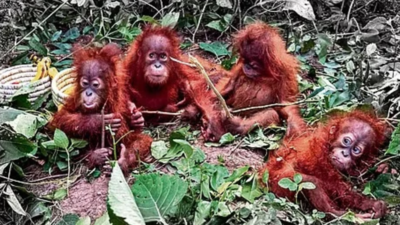
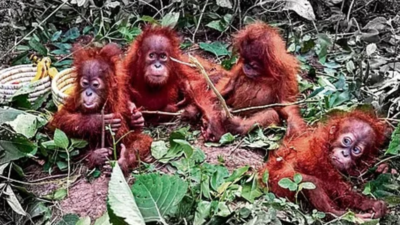
CHENNAI: Five baby orangutans rescued from a forest in Baleshwar, Odisha, should be repatriated to Indonesia in accordance with the Convention on International Trade in Endangered Species (CITES), wildlife experts have said.Primate researcher Willie Smits, founder of the Borneo Orangutan Survival Foundation and a personal adviser to Indonesia’s Ministry of Forestry, said the apes should not be kept confined in enclosures, as this could cause trauma that can often prove fatal. Asked about the appropriate rehabilitation approach for orphaned baby orangutans in such situations, he said Indonesia has certified rehabilitation centres where rescued infants could be sent for proper care and eventual reintegration into the wild. According to Smits, a standard operating procedure exists for repatriating and rehabilitating baby orangutans, including DNA testing, quarantine on arrival and a period of socialisation.He said the six-to-eight-month-old infants require milk, with baby formula recommended at half the strength given to human infants. Dedicated, health-checked babysitters should care for them and should not be changed if possible, he said. Confinement to small spaces leads to trauma, diarrhoea and parasite-induced infections, he added, stressing that loving care remains the top priority for the infant apes.Primatologist G Agoramoorthy, a former professor at Tajen University in Taiwan, said continued illegal smuggling of orangutans for the exotic pet and zoo trade remains a major driver of the species’ declining population in the wild. He said baby orangutans rescued or confiscated outside their native habitat should be repatriated at the earliest opportunity to improve their chances of successful release back into the wild.Orangutans are highly endangered great apes native to the tropical rainforests of Southeast Asia, sharing about 97 per cent of their DNA with humans. They are semi-solitary animals that require large tree canopies to move and forage, and confinement to zoo enclosures affects their physiological and mental health, Agoramoorthy said.